
A Fast Fashion Queer Company
Facebook
Twitter
Youtube
Twitter
Queer Influenced Fashions
Facebook
Twitter
Youtube
Twitter
I AM QUEER
I AM QUEER
What is gender non-conforming?
Writer: Andrew Ferlitsch
I am gender fluid, which means that the gender I express varies over time. I first realized this when I was 11 years old in 1973. It was the second time I tried on over-the-knee cotton girl socks, and they felt incredibly comfortable. Before the current era of inclusivity, I expressed my
gender non-conforming identity in what was then referred to as alternative lifestyle/venues. Now, let’s delve into the basics of:
- Sexual Orientation,
- Gender Identity,
- Gender Expression
Sexual Orientation
In a binary view, sexual orientation is often defined by the gender one is attracted to. However, in the queer world, sexual orientation can encompass not only sexual attraction but also emotional and/or romantic attraction. It’s important to note that these attractions don’t have to align in all three areas. For instance, someone may experience sexual attraction but not romantic attraction, and they may identify as having an “aromatic” sexual orientation.
Everyone is generally familiar with the concept of transgender. It means that the person is or has transitioned from their assigned gender at birth to another gender. This transition can be either in the form of gender identity and/or gender expression.
Gender identity
Gender identity refers to the internal sense of being male, female, or another gender. Some transgender individuals may choose to undergo hormone replacement therapy (HRT) to alter their physical characteristics to align with their gender identity. For example, someone assigned male at birth but identifying as female may take estrogen to develop feminine physical traits like wider hips and breasts.
Additionally, transgender individuals may use terms like non-op, pre-op, and post-op to describe their stage of physical transition. Non-op refers to individuals who have not pursued any physical changes, while pre-op refers to those who have made physical changes without undergoing surgery. Post-op refers to individuals who have undergone surgery as part of their physical transition. It’s important to remember that each transgender person has the autonomy to decide how and when, or if at all, they want to pursue physical transition.
A person who is transitioning may choose to identify as non-binary instead of transgender.
However, it’s important to note that identifying as non-binary does not necessarily imply that
someone is transitioning.
Gender expression
Gender expression refers to how individuals express themselves, including their clothing, voice, mannerisms, emotions, and values. It can be further categorized into external and internal expressions. External expressions include clothing, voice, and mannerisms, while internal expressions encompass emotions and values.
In most cases where gender identity does not align with the gender assigned at birth, individuals also have a gender expression that matches their gender identity. However, this is not always the case. Some individuals may have a gender expression that does not align with their assigned gender at birth, and their gender identity may or may not match their gender expression. This is more commonly seen in individuals who identify as gender fluid. While their gender expression may vary over time, their gender identity remains consistent with the gender assigned at birth. In my case, my gender identity is always male (assigned at birth), but my gender expression varies between male, female, and everything in between. However, my sexual orientation is always non-heterosexual.
In the queer community, we do not rigidly assign orientation, identity, and expression. Instead, we allow individuals to choose the labels that best describe themselves. It’s important to note that a person whose gender expression does not match their assigned gender at birth, but whose gender identity does, may also identify as transgender.
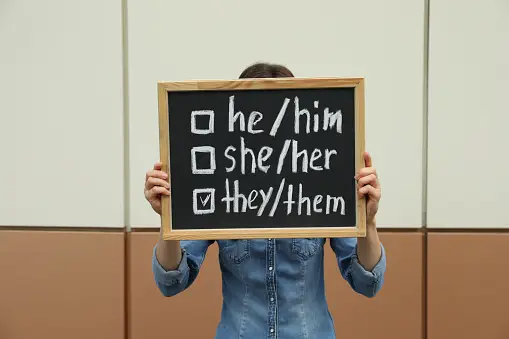

Cisgender
Cisgender is a term that you may have come across, and it can be a bit confusing. In simpler terms, it refers to individuals who identify with the gender they were assigned at birth. For instance, a cisgender male and cisgender female would have the following characteristics:
- Orientation: Heterosexual
- Gender Identity: Matches the gender assigned at birth
- Gender Expression: Matches the gender assigned at birth
In the past, it was estimated that around 4% of the population identified as gay. However, more recent surveys conducted between 2021 and 2023, both in the US and internationally, suggest that over 9% of the population identifies as gay/lesbian and/or gender non-conforming. The largest growing group within this category is people who identify as non-binary.
Even within the cisgender community, these definitions are not rigid. For example, a man may identify as cisgender but have non-sexual romantic feelings towards other men, which is often referred to as a bromance.
Gay/Lesbian
In the past, the definition of being gay or lesbian was often based on the idea that if a man slept with another man, regardless of the context, he was considered gay. However, our understanding of sexual orientation has evolved over time. Nowadays, we consider the individual’s own identification and context. The definition of being gay or lesbian is now more specific:
- Orientation: Gay/Lesbian
- Gender Identity: Gender assigned at birth
- Gender Expression: Gender assigned at birth
It’s important to note that the difference between being gay or lesbian and being cisgender lies primarily in their sexual orientation, while their gender identity and expression still align with the gender assigned at birth.
However, it’s crucial to remember that each individual has the right to self-identify. For instance, a gay femboy may choose to identify their gender expression as female.

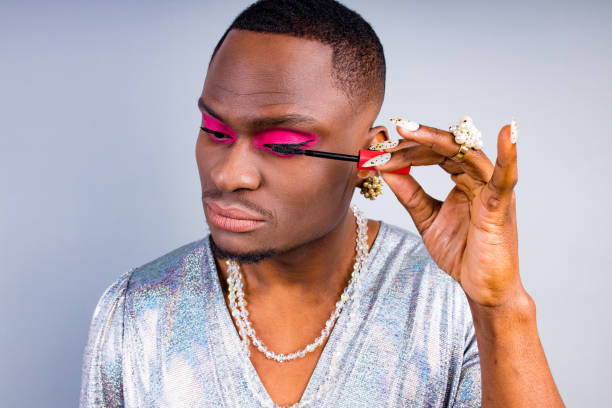
Bi-Male/Bi-Female
An individual who identifies as bisexual is attracted to both male and female genders, but their romantic and emotional attraction is generally towards the opposite gender. In the past, due to cultural biases, bi-males were often labeled as gay and bi-females as heterosexual.
In the queer community, bi-males and bi-females are generally considered to have a
non-heterosexual orientation. However, it is important to note that individuals have the freedom to choose how they identify.
- Orientation:
Sex: Male and Female
Romantic/Emotional: Heterosexual - Gender Identity: Gender assigned at birth
- Gender Expression: Gender assigned at birth
Bi-Curious
Bi-curious individuals are those who identify as essentially heterosexual but may experience romantic or emotional attraction to non-heterosexual individuals. This attraction can potentially develop into a sexual relationship once a romantic or emotional connection has been established.
It is common for the non-heterosexual individual that bi-curious individuals are attracted to have the same gender assigned at birth. However, their gender identity and/or expression may differ from the bi-curious individual, such as being transgender, non-binary, or other gender non-conforming identities.

Queer
Queer is a term that can be both an umbrella term and an identification. It can be a bit confusing, but essentially, it encompasses everything that is gender non-conforming, excluding cisgender, gay/lesbian, or bisexual individuals. However, it’s important to note that some gay, lesbian, or bisexual individuals may also identify as queer.
On the other hand, some people use the term queer in a more specific way to differentiate themselves from transgender individuals. In this context, their gender identity aligns with the gender assigned at birth, but their gender expression does not.
It’s important to note that their sexual, romantic, and emotional attractions may or may not be towards the opposite gender and/or transgender individuals.
In a narrower scope, queer individuals can be described as having a non-heterosexual orientation, with a gender identity that aligns with the gender assigned at birth, but a gender expression that does not:
Orientation: Non-heterosexual
Gender Identity: Gender assigned at birth
Gender Expression: Not the gender assigned at birth



Non-Binary
Non-binary individuals incorporate aspects of both male and female genders into their gender identity and/or gender expression. It is important to note that identifying as non-binary does not necessarily mean that an individual is transitioning. Non-binary is its own distinct gender identity and/or gender expression.
Today, an increasing number of individuals choose to identify as non-binary if they experience some aspects of their sexual orientation as non-heterosexual, but not all. Additionally, they may have some aspects of their gender identity or external gender expression that do not align with the gender assigned at birth, but not all aspects. Non-binary individuals may also have an internal gender expression that does not match the gender assigned at birth:
– Some aspects of their sexual orientation are non-heterosexual, but not all.
– Some aspects of their gender identity do not match the gender assigned at birth, but
not all.
– Some aspects of their external general expression do not match the gender assigned at birth, but not all.
– Their internal gender expression does not match the gender assigned at birth.
Transgender
Transgender individuals identify with a gender that is different from the gender assigned to them at birth. It’s important to note that in the queer community, there are multiple genders, not just the opposite gender. For example, a transgender person may identify as female or non-binary.
Similarly, those who identify as non-binary may or may not identify as transgender. The terms ‘trans’ and ‘non-binary’ are often used together to show where these identities intersect. It is becoming more common for individuals who are transitioning and still have some physical or expressive characteristics of their assigned gender at birth to identify as non-binary or non-binary trans.
While most transgender individuals relate their identity to their physical gender characteristics, not all do. Some transgender individuals may continue to identify with the gender assigned at birth, but their gender expression does not match that assigned gender. This creates a gray area between the narrow definition of queer and the broader definition of transgender. In the narrower definition of transgender:
- Orientation: Non-heterosexual
- Gender Identity: Not the gender assigned at birth
- Gender Expression: Not the gender assigned at birth

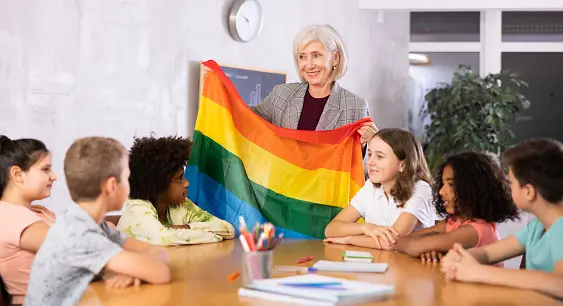
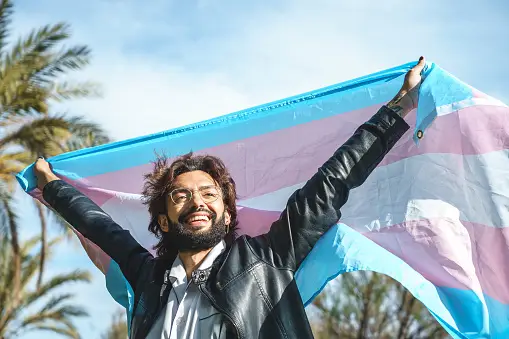
Now, how do transgender and/or non-binary transgender individuals identify their sexual orientation? While they are non-op, they typically identify as gay/lesbian or simply non-heterosexual. However, when they start or complete their transition, this may cause a change in how they perceive their sexual orientation. For example, pre-op or post-op individuals may now see themselves as heterosexual.
Pre-op transitioning is achieved through gender-affirming therapy, also known as hormone replacement therapy (HRT), and post-op transitioning is achieved through surgical correction.
Non-op individuals may achieve gender affirming without hormones or surgery, such as through voice training and permanent removal of facial and body hair.
Genderfluid
Genderfluid individuals experience variations in their gender identity and/or gender expression
over time. Unlike transitioning, which involves a change in one direction, genderfluid individuals
may experience fluctuations in their gender identity and expression.
In some cases, a genderfluid individual’s gender expression may vary while their gender identity
remains constant. When a genderfluid individual’s gender identity and/or expression changes,
their sexual orientation may also correspondingly change.
Intersex
Intersex individuals are born with a combination of male and female physical gender characteristics.
Some intersex individuals may choose to undergo gender affirming therapy and surgery to transition
to a single sex, while others may choose to remain intersex.
Asexual
Asexual individuals experience a lack of sexual attraction towards others. However, this does not
mean they are incapable of engaging in sexual activities or experiencing romantic and emotional
attraction.
Aromantic
Aromantic individuals experience a lack of romantic or emotional attraction towards others,
regardless of the other individuals’ orientation, identity, or expression. This means that they do not
experience romantic or emotional connections with others, even if they may still experience sexual
attraction.
Demisexual
Demisexual individuals experience a lack of sexual attraction until a deep emotional connection has
been formed. They may feel romantically and emotionally attracted to others, but sexual attraction
only arises once a strong bond has been established.
Pansexual
Pansexual individuals are sexually attracted to people of all gender identities and expressions. They
often describe themselves as not being limited by gender when it comes to attraction.
Closing Remarks
Sexual orientation and gender identity/expression are intricate and multifaceted aspects of human identity, encompassing a vast array of experiences and attractions. By delving into these distinct orientations and identities/expressions, our goal is to cultivate understanding, acceptance, and inclusivity for individuals who identify with these diverse sexual orientations and gender identities/expressions. Through education and empathy, we can create a more inclusive and supportive society for all.
FACEBOOK
TWITTER
iNSTAGRAM
YOUTUBE
info@fashions.org
Copyright ©️2023 Expressions, All Rights Reserved.


